Ryan Caidic on building creative stamina

Someone I looked up to once told me that you shouldn’t expect to find happiness in your job, you have to look for it somewhere else. It’s a dilemma most of us face at some point: the tension between what we do for a living and what we do for ourselves. The things that fulfill us creatively often exist outside our livelihood, and sometimes we can’t help but resent our jobs for keeping us from endeavors that feel more meaningful.
Ryan Caidic, who’s received multiple awards for his work as an advertising creative director and who recently started publishing his poetry, was once my head writer and is one of the few people I know who’s managed to balance both worlds gracefully. He works in a cutthroat industry and yet, he’s found a way to let that same intensity feed his poetry.
In this conversation, Ryan talks about how his work in advertising and his poetry fuel each other, his thoughts on whether ad people are really just driven by awards, and how living abroad has given him a new kind of clarity.
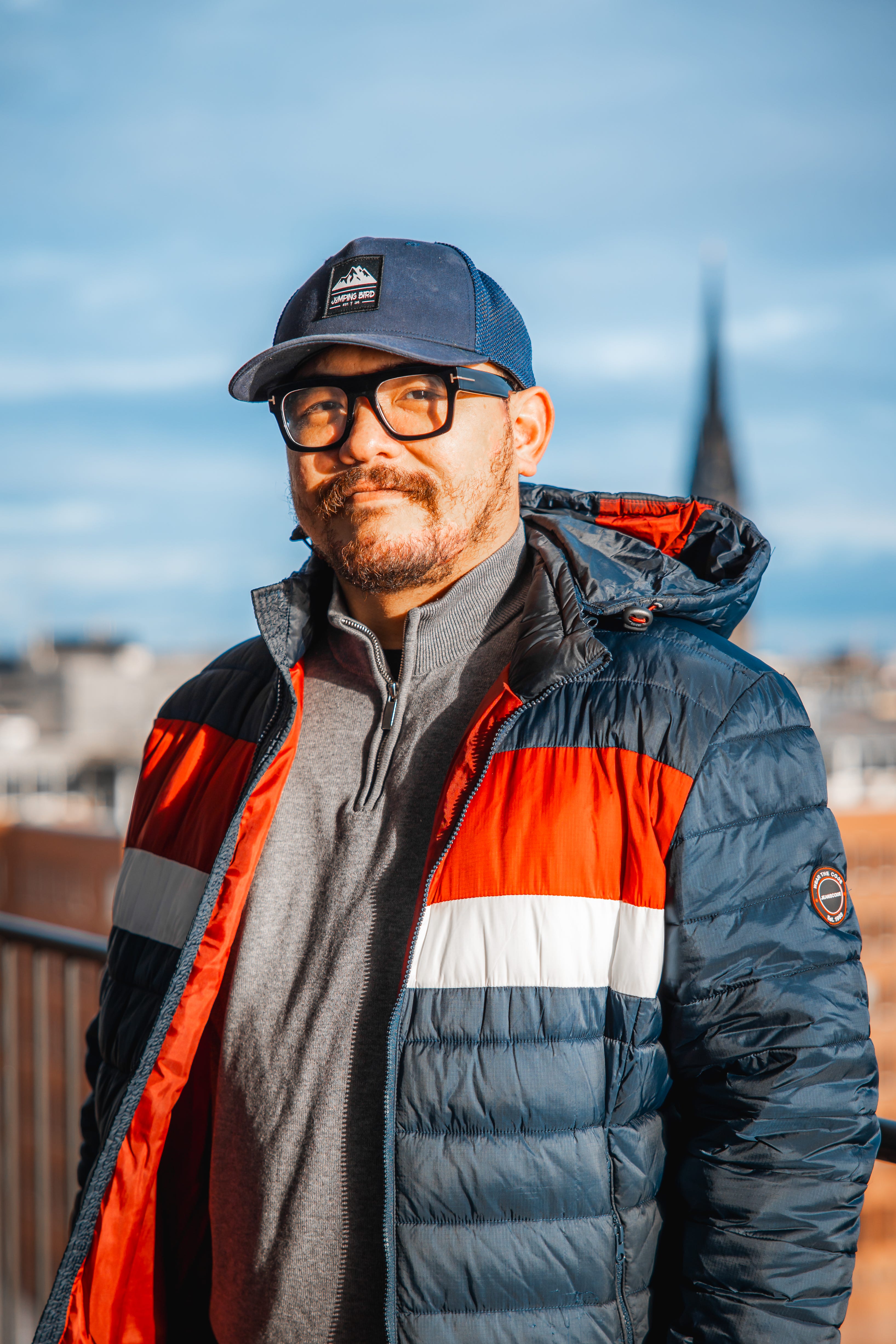
“Coming up with ideas nonstop can be exhausting, but creative stamina is a mindset that can be learned. I wasn’t a ‘creative machine’ when I first joined advertising. I think once you see it as an opportunity instead of a challenge, it stops being scary and starts feeling like a superpower.”
You’ve been working on two things that sit on opposite ends of the creative spectrum: advertising and poetry. One is tied to selling ideas to the widest audience possible, while the other is an intimate form of artistic expression. Collaboration is central to one, while the other is largely solitary work. Can you talk about what led you to each, and how you move between these two very different creative worlds?
I think advertising and poetry have a lot in common, which is probably why I gravitated towards both from an early age. They are powerful forms of storytelling, whether from the voice of a brand or the poet.
Both spark ideas. A haiku by Basho can capture how tiny we are in the grand scheme of things in just 17 syllables, the same way Apple’s most iconic Super Bowl spot can show defiance against sheep mentality in 60 seconds.
You’re right when you say that the glaring difference is that one involves orchestrating teams across strategy, digital, production, and other moving parts to create a campaign. Poetry, on the other hand, is a deeply personal discipline. In fact, they say that being a poet is one of the loneliest occupations, because you’re an observer in the middle of all the world’s noise. “The lonely one who looks on, the bearer of human longing,” said the poet Hermann Hesse.
What’s great is that each platform offers the opportunity to create every day, whether by myself or with a team. It’s like waking up with the opportunity to ask: What story can I tell? How can I move someone? What difference can I make? That, to me, is an exciting way to live.
You mentioned the term “creative machine” in our previous conversation. It’s a loaded phrase that can sometimes suggest churning out idea after idea, output after output—something that feels soulless and exhausting. Do you see it differently? Is poetry, for you, a way of stepping back from that kind of work environment?
It’s true. Coming up with ideas nonstop can be exhausting, but creative stamina is a mindset that can be learned. I wasn’t a “creative machine” when I first joined advertising. I think once you see it as an opportunity instead of a challenge, it stops being scary and starts feeling like a superpower. Collaboration helps too. Being humble enough to let others shape your ideas, getting a new perspective from a planner or an accounts person, or staying open to new trends and AI-based tech will make everything easier. I’m still learning even now.
As for poetry, I don’t really see it as stepping back from the demands of advertising since both are creative pursuits that feed into who I am. Poetry, though, is a treat I give myself. It’s like baking donuts the entire day. You hand some to the people you mentor, some to the clients and brands you work on, and some to your peers. The last donut? That’s for you. It may not be perfect, but it’s yours. You eat it, and it nourishes you. That’s poetry.
Advertising creatives are often seen as being motivated by recognition and awards. Is that true for you? What other aspects of the work drive you?
It’s funny because when I was at Cannes last year, it hit me that the city celebrates the pinnacle of creativity in the arts with the Cannes Film Festival, and one month later it becomes a celebration of creativity in consumerism with the Cannes Lions.
Sure, advertising awards can seem shallow, but the fact is, they matter. Alongside an agency’s body of work, awards build reputation, showcase its competitive edge, bring in new clients, and deliver a measurable impact on the bottom line. They open doors for creatives, and clients genuinely want their brands to win at Cannes.
The best aspect about advertising is its power to impact humanity. I’ve been lucky to have an agency that backed the causes I care about. Through the years, I’ve been able to work on meaningful campaigns like launching the first Christmas carol sung by shelter dogs and cats to promote pet adoption, bringing back slain journalists using AI to fight for press freedom, and designing a sustainable alternative for single-use hang tags. They may have won awards here and there, but they worked and made a real impact–that’s what counts above all. Being able to use creativity for good is what keeps me excited about the industry.
“Back home, I couldn’t really write about life because I was swimming in it. Like I’ve said in another interview, the distance gave me perspective. It’s like I was once the creator of a museum of my life, but now, I’m the curator. I can see things differently from a new vantage point and write about them more clearly.”
Much of your poetry reflects your diaspora experience. How has moving abroad shaped your writing?
I think moving abroad can make a poet out of anyone. All of a sudden, you’re in a completely different world. Your kids learn a new language, your wife gets to shape a brand from a global perspective, everyone follows the rules because they actually care, and taxes really do go back to the community. Mind-blown. Then there’s the weather and the seasons that are totally new. Your ethnicity can throw a few unexpected challenges your way too. These experiences, both rewarding and challenging, can compel any writer to create.
Back home, I couldn’t really write about life because I was swimming in it. Like I’ve said in another interview, the distance gave me perspective. It’s like I was once the creator of a museum of my life, but now, I’m the curator. I can see things differently from a new vantage point and write about them more clearly.
I’m equally surprised and thankful for the incredible reception from the global community, especially for poems that carry much of our local culture. It’s only recently that I started writing with the goal of being published, and I’m so fortunate to have been taken up by all of these fantastic journals in the US and Europe, the recognition from international poetry prizes, not to mention two book offers and a book deal in just a year. Wild. As a Filipino diaspora writer, I know this platform doesn’t come often, so I’m just trying to make the most of it.
Is there any project you’re currently working on that you’re excited to put out there?
I’m excited to share that my collection 50 Ways Home, which is forthcoming from Fernwood Press next year, will be available online and select bookstores across the US. It’s a book of diaspora poems that asks what it means to carry one’s home while building another in a new country. It’s about learning to live in two places at once, told through the seasons, local rituals, and family narratives. To me, every poem was a way home, even if I never stepped on a plane.
The book is also chapter-marked by photos I took while living in Germany. I kept coming back to the same spots in my neighborhood and shooting them in different seasons. Bare in winter, bursting with greenery in spring, crowded with sunbathers in summer, then back to a blank, white slate. These extreme shifts demonstrate how places and our perspective of them are always, always changing.
I’m actually working on my second collection, this time with Denmark as a backdrop. We’ll see where that leads.
Five things that bring me joy
My wife and two kids, being able to travel anywhere in Europe by train, and of course, sinigang in winter
One thing I wish I’d created
Actually, four things. Poems with brilliant metaphors like Rumi’s “The Guest House,” Seamus Heaney’s, “Digging,” which I think is the perfect ars poetica, and Mary Oliver’s “Wild Geese,” which is always a comfort to those who feel lost. For advertising, it’s “Shot on iPhone,” a simple yet clever way to turn users into advertisers.
Creative people who inspire me
In advertising, Melvin Mangada, a legend in Philippine advertising whom I’ve been lucky to learn from. In poetry: Ilya Kaminsky, Richard Blanco,Kevin Young, Joy Harjo, the current US Poet Laureate Ada Limón, who won the MacArthur Genius Prize (that’s a 45M Php prize, eat that, people who say poetry doesn’t pay 🙂), and other contemporary voices doing interesting stuff like Kaveh Akbar, Yusef Komunyakaa, Aria Aber, Kwame Dawes, and more.